
Commercial Foundation Warning Signs for Lakeway Property Managers
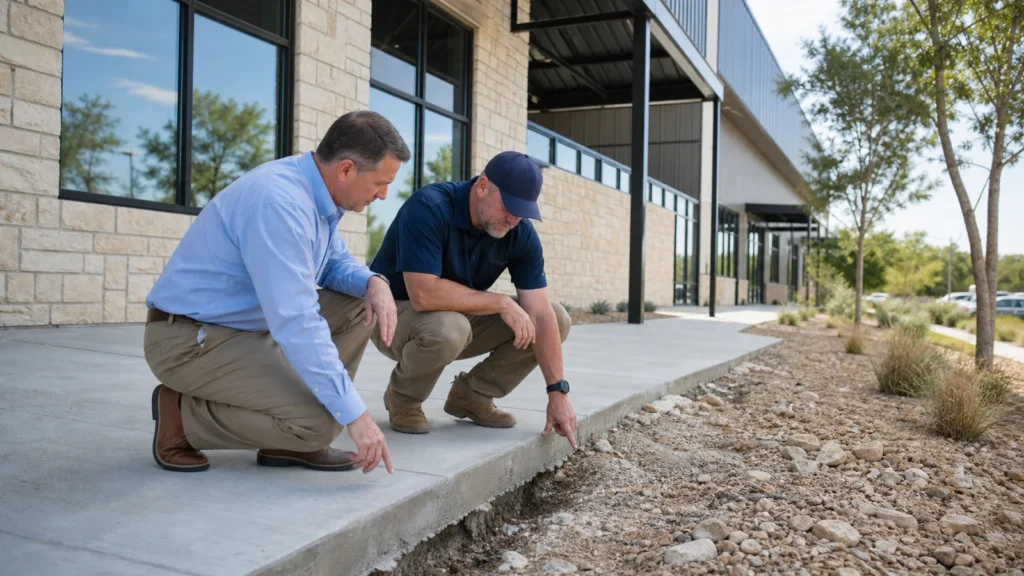
Property managers should track recurring cracks, slab or floor transitions, binding doors, storefront misalignment, drainage concentration, utility symptoms, and changes that affect safe use. Document location and progression, address immediate hazards, and obtain a structural evaluation when symptoms form a pattern.
Questions to Ask Before Pressed Piling Installation in Lakeway
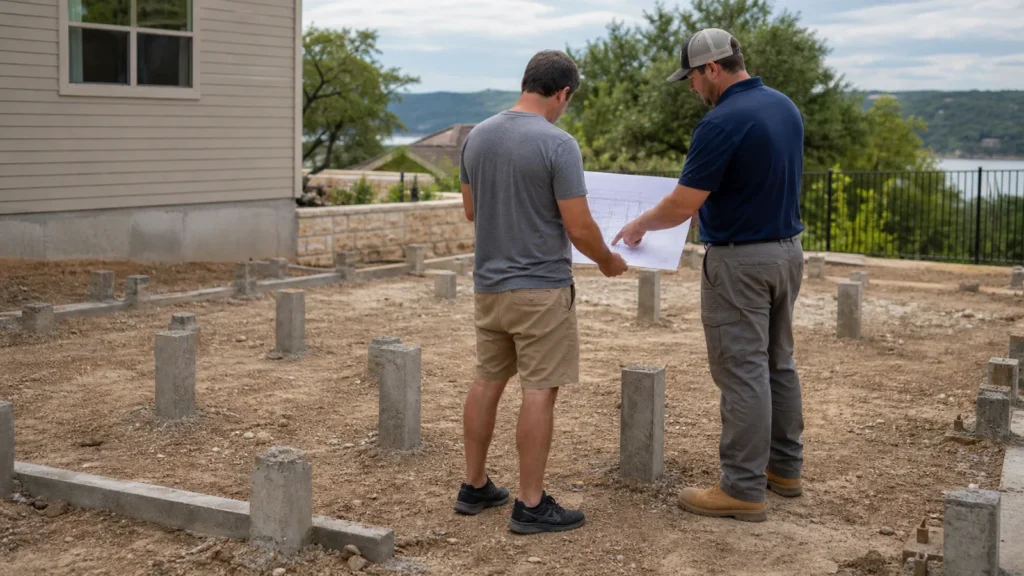
Before installation, ask how movement was measured, why each piling location is needed, what access and excavation are required, how utilities will be protected, how the structure will be monitored, and what documentation you will receive. Answers should connect directly to the property’s condition.
Pressed Concrete Pilings in Lakeway: What Homeowners Should Know
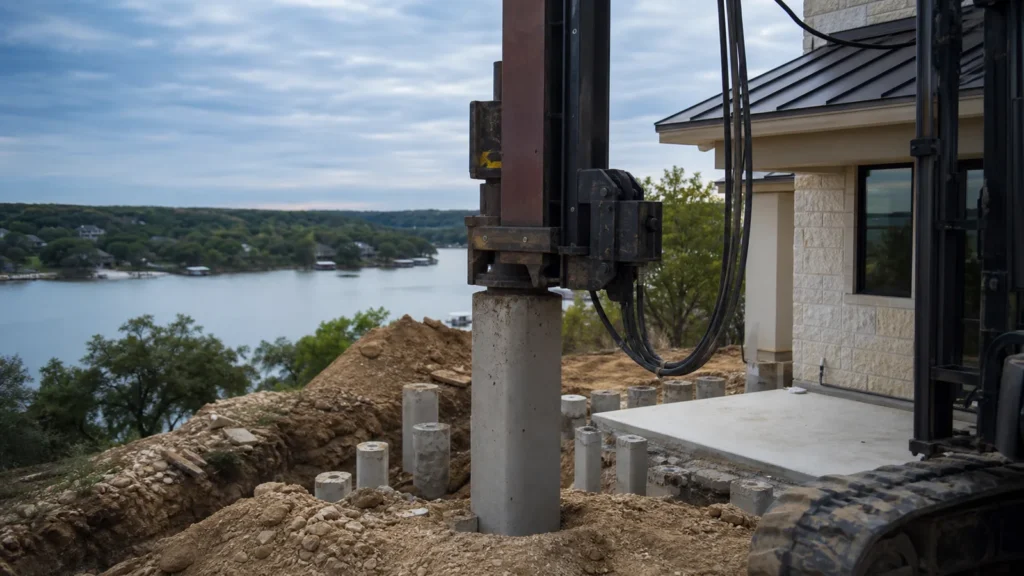
Pressed concrete pilings are foundation-support components installed beneath selected areas to improve bearing and stabilize movement. Suitability depends on the structure, measured movement, access, soil response, and the repair design. Homeowners should ask where pilings are proposed, why those locations were chosen, and how results will be checked.
When House Raising or Lifting May Be Considered in Lakeway
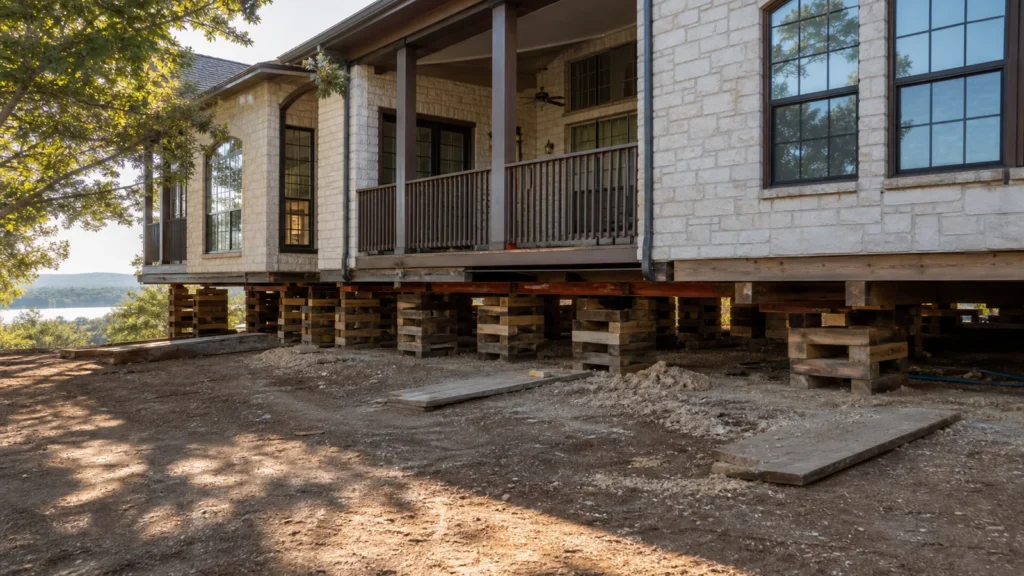
House raising or lifting may be considered when a project requires access below the structure, major support correction, elevation changes, or other substantial work. It is a complex operation that should be planned around the structure, utilities, site access, applicable permits, and qualified professional guidance.
Planning Utilities and Access for House Lifting in Lakeway

House-lifting preparation should identify utility responsibilities, equipment access, temporary support areas, occupant restrictions, material staging, inspections, and the sequence for reconnection and closeout. These decisions belong in the project plan before lifting begins.
House Leveling vs. Foundation Stabilization: A Lakeway Guide
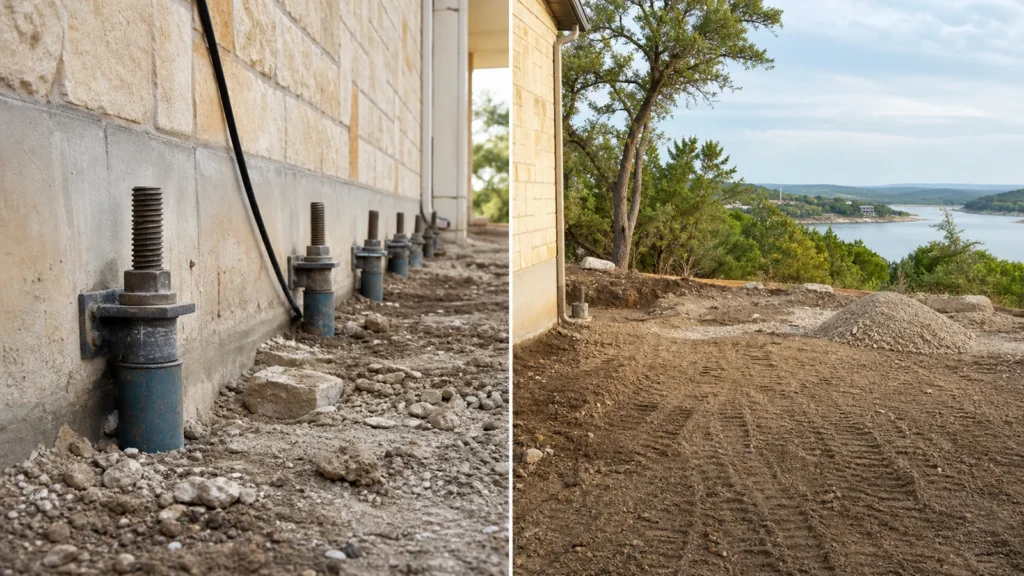
Leveling focuses on improving a structure’s position or floor profile, while stabilization focuses on improving support and limiting continued harmful movement. A project may involve one or both. The diagnosis should state whether the priority is correction, support, or a staged combination.
House Leveling in Lakeway: What the Process Is Designed to Do
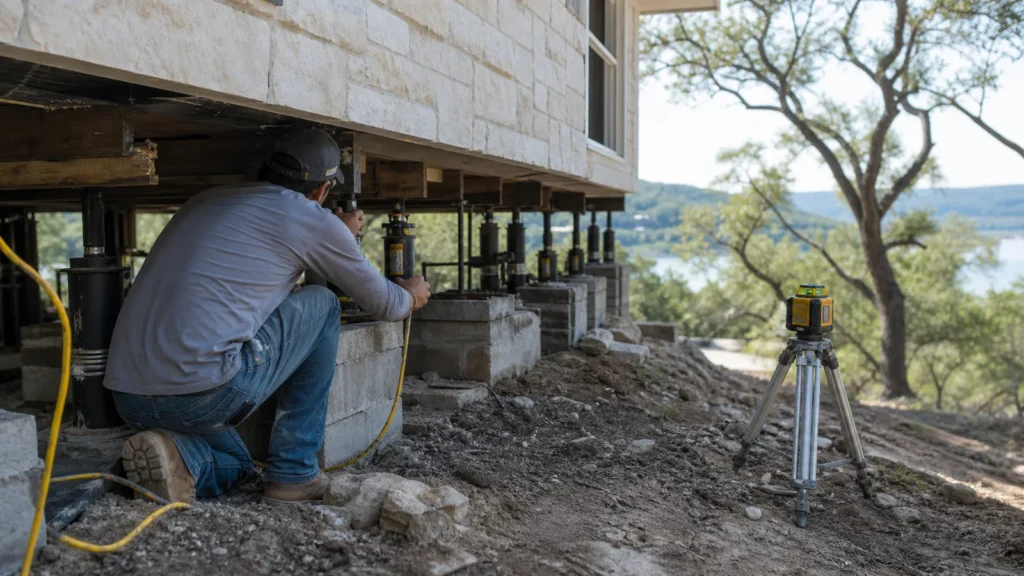
House leveling is designed to improve the structure’s support and correct harmful unevenness in a controlled way. The process starts with measurement and diagnosis, then uses a planned sequence of support adjustments or repairs. The safe target is based on the building’s condition, not a promise that every old finish becomes perfectly straight.
How to Prepare a Pier and Beam Home for Foundation Work in Lakeway
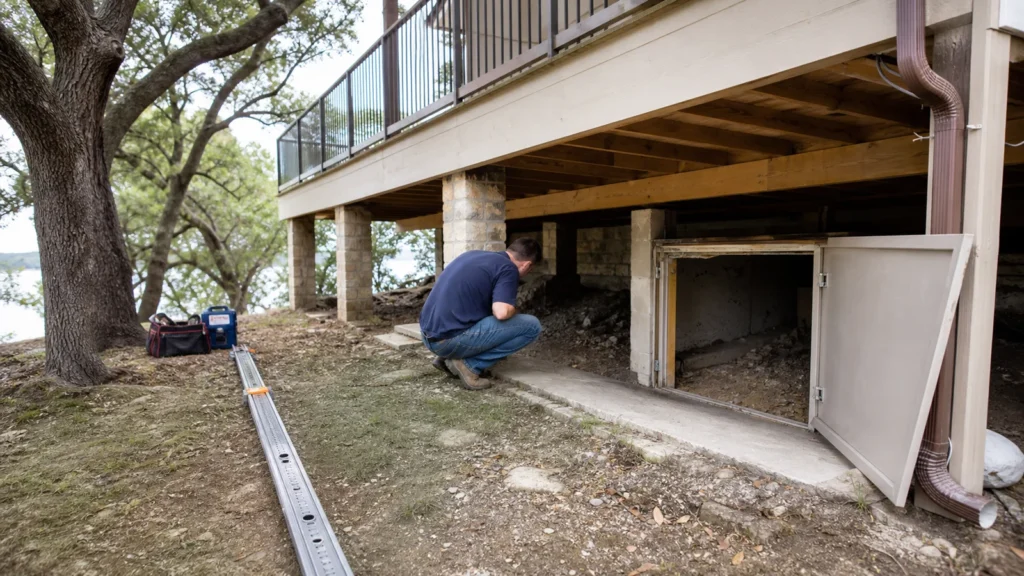
Before pier-and-beam work, clear agreed access areas, secure pets and fragile items, document existing cracks and floor conditions, identify utilities, and confirm how the crew will enter the crawlspace. The contractor should explain what needs to move and what can remain in place.
Block and Base Foundation Repair in Lakeway: How an Evaluation Works
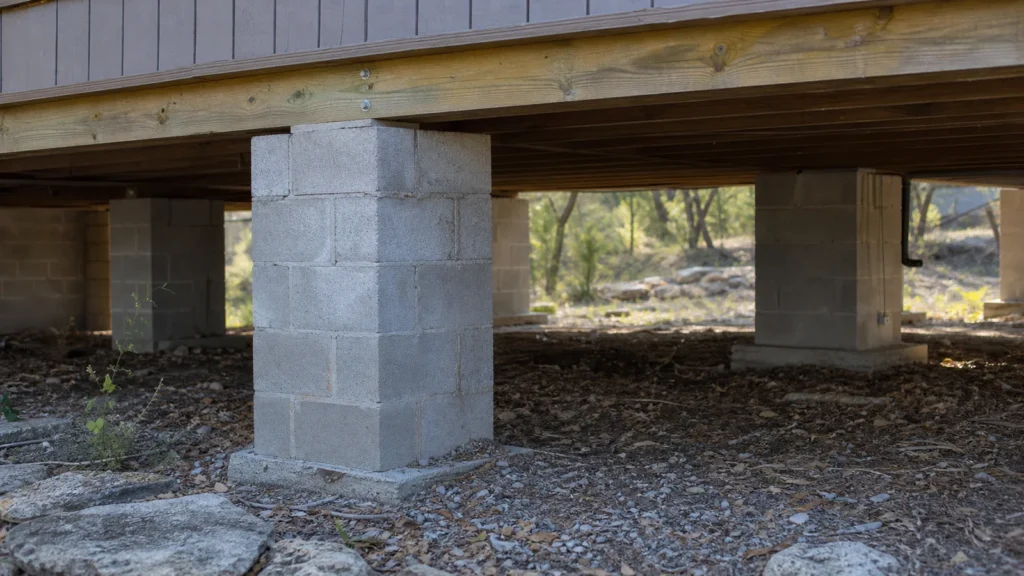
A block-and-base evaluation checks whether supports are aligned, stable, properly bearing, and connected to sound framing. It also compares crawlspace conditions with floor, wall, and opening symptoms above. The goal is to identify the support path that has changed and develop a controlled correction.
Crawlspace Moisture and Pier and Beam Foundations in Lakeway
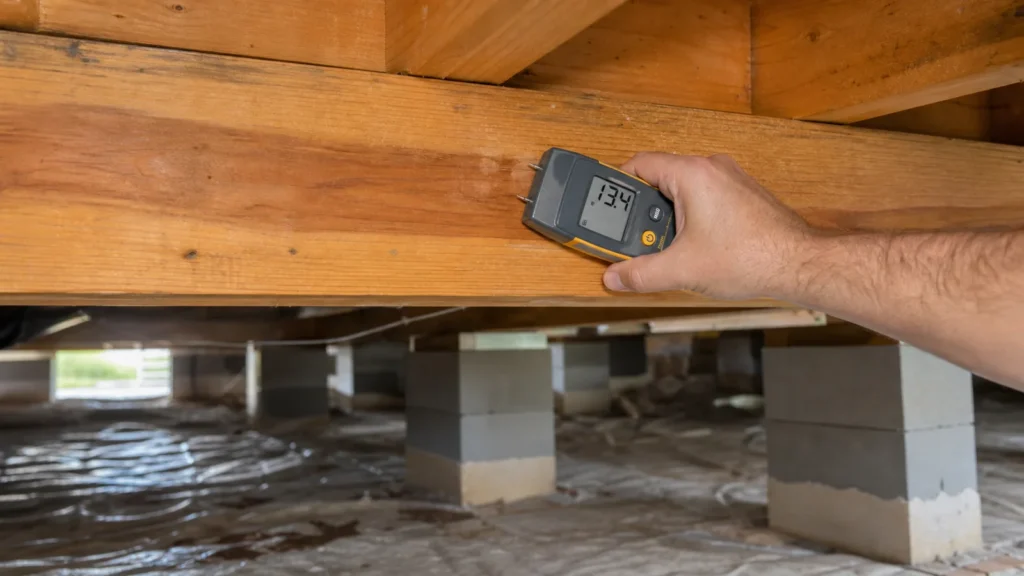
Persistent crawlspace moisture can affect wood, connections, air quality, and access beneath a Lakeway home. Owners should look for water entry, standing moisture, staining, odor, corrosion, and soft wood, then correct the source and evaluate any affected structural components.