
What Should Buyers Check Before Purchasing a Lakeway Home With Foundation Concerns?

A Lakeway homebuyer due-diligence guide for foundation symptoms, records, inspections, plumbing, drainage, repair estimates, warranties, and closing questions.
How Should Lakeway Homeowners Compare Foundation Repair Estimates?

A practical Lakeway homeowner guide to comparing foundation repair proposals by evidence, scope, method, access, verification, warranty, and exclusions.
Dripping Springs Foundation Care Through Wet and Dry Cycles
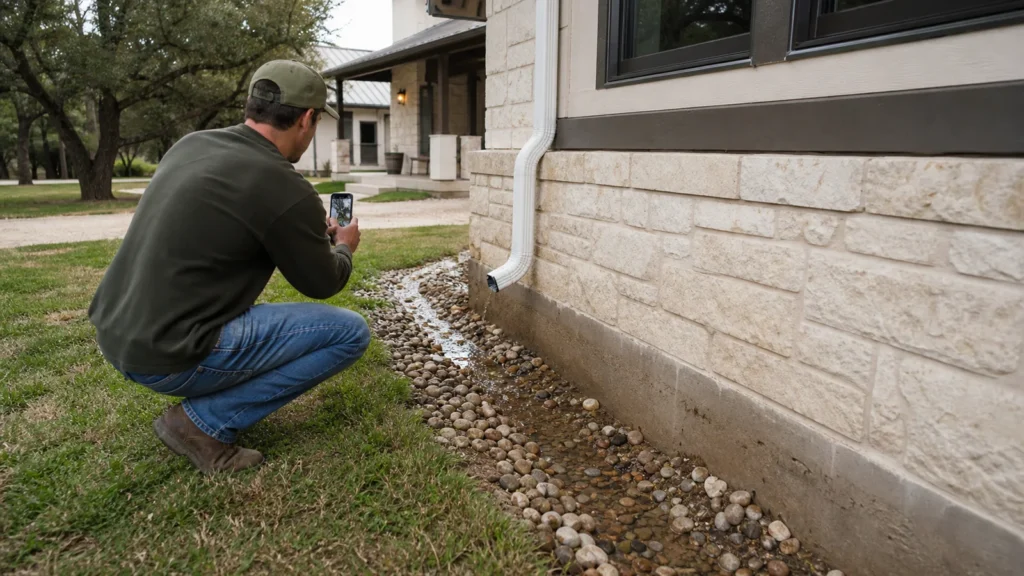
Dripping Springs property owners can track foundations through weather changes by keeping drainage paths clear, photographing repeat locations, noting soil gaps or erosion, and recording doors, floors, and cracks. Maintenance reduces avoidable water concentration but does not replace repair when measured movement is present.
Foundation Repair in Bee Cave: Slab and Drainage Clues
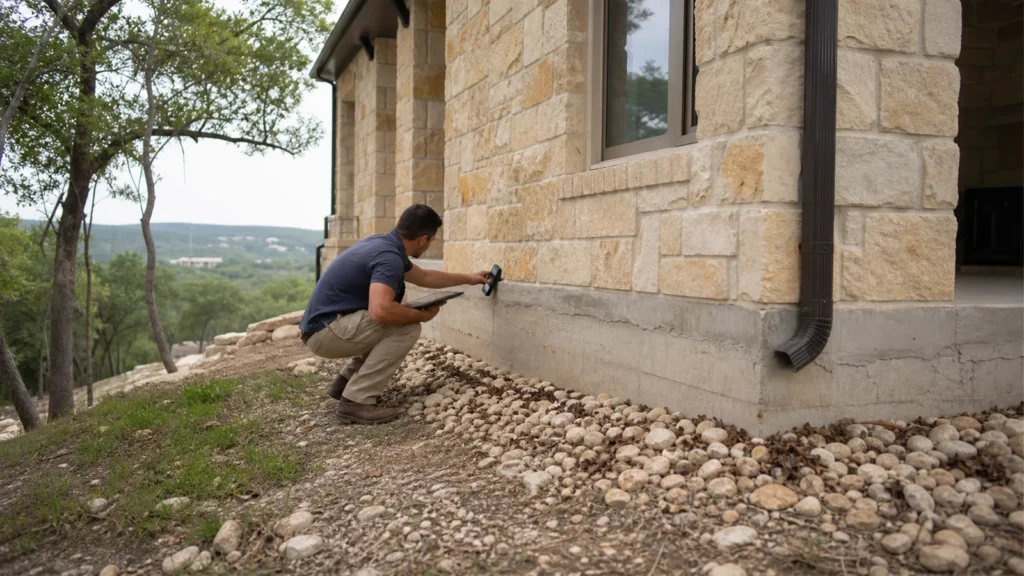
Bee Cave owners should document slab or masonry cracks, floor changes, sticking openings, ponding, runoff concentration, and erosion around the same area of the home. A cluster of structural and drainage clues deserves an evaluation, while one stable cosmetic mark may only need monitoring.
House Leveling vs. Foundation Stabilization: A Lakeway Guide
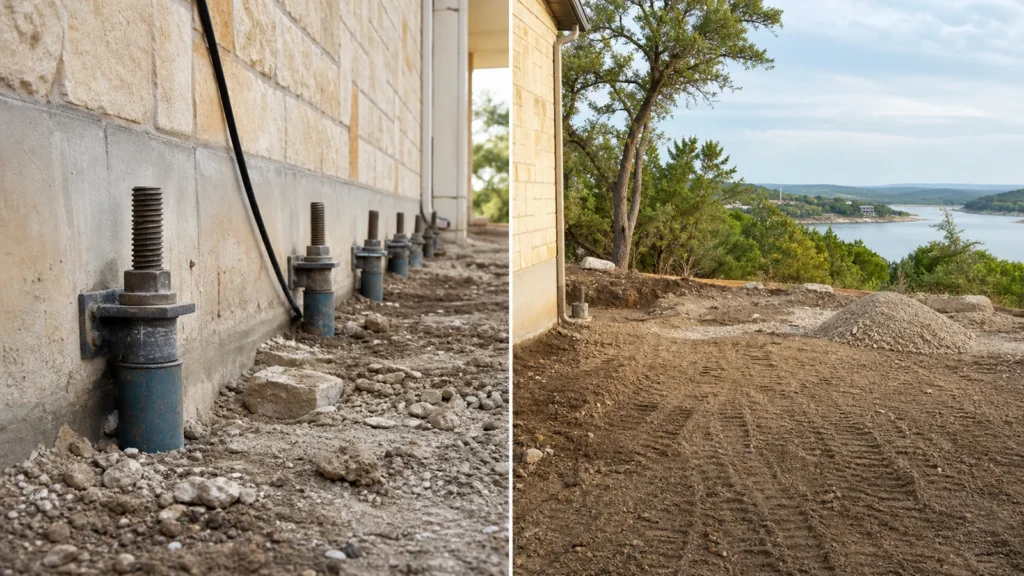
Leveling focuses on improving a structure’s position or floor profile, while stabilization focuses on improving support and limiting continued harmful movement. A project may involve one or both. The diagnosis should state whether the priority is correction, support, or a staged combination.
House Leveling in Lakeway: What the Process Is Designed to Do
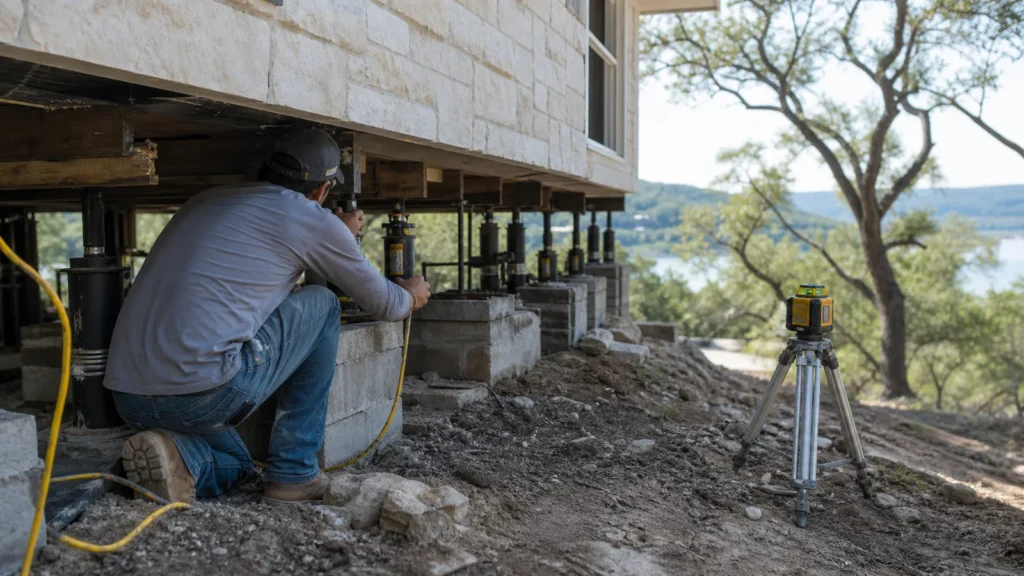
House leveling is designed to improve the structure’s support and correct harmful unevenness in a controlled way. The process starts with measurement and diagnosis, then uses a planned sequence of support adjustments or repairs. The safe target is based on the building’s condition, not a promise that every old finish becomes perfectly straight.
How to Prepare a Pier and Beam Home for Foundation Work in Lakeway
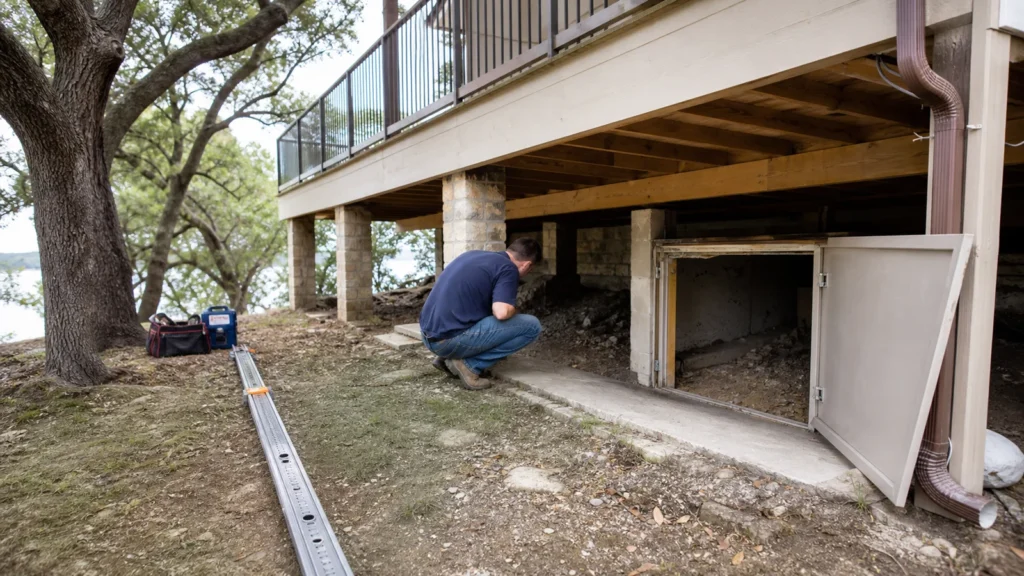
Before pier-and-beam work, clear agreed access areas, secure pets and fragile items, document existing cracks and floor conditions, identify utilities, and confirm how the crew will enter the crawlspace. The contractor should explain what needs to move and what can remain in place.
Block and Base Foundation Repair in Lakeway: How an Evaluation Works
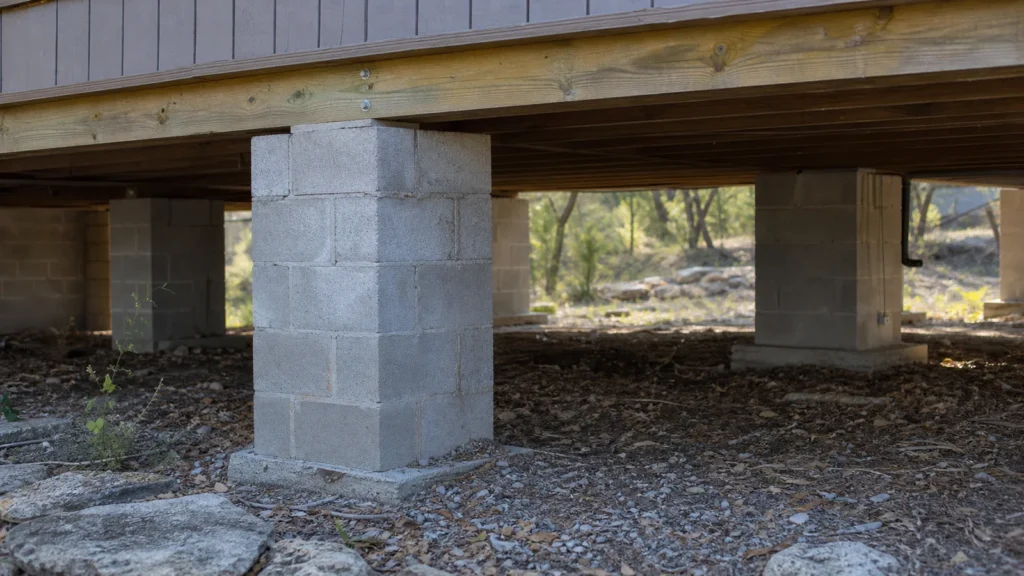
A block-and-base evaluation checks whether supports are aligned, stable, properly bearing, and connected to sound framing. It also compares crawlspace conditions with floor, wall, and opening symptoms above. The goal is to identify the support path that has changed and develop a controlled correction.
Bouncy Floors in a Lakeway Pier and Beam Home: Possible Causes
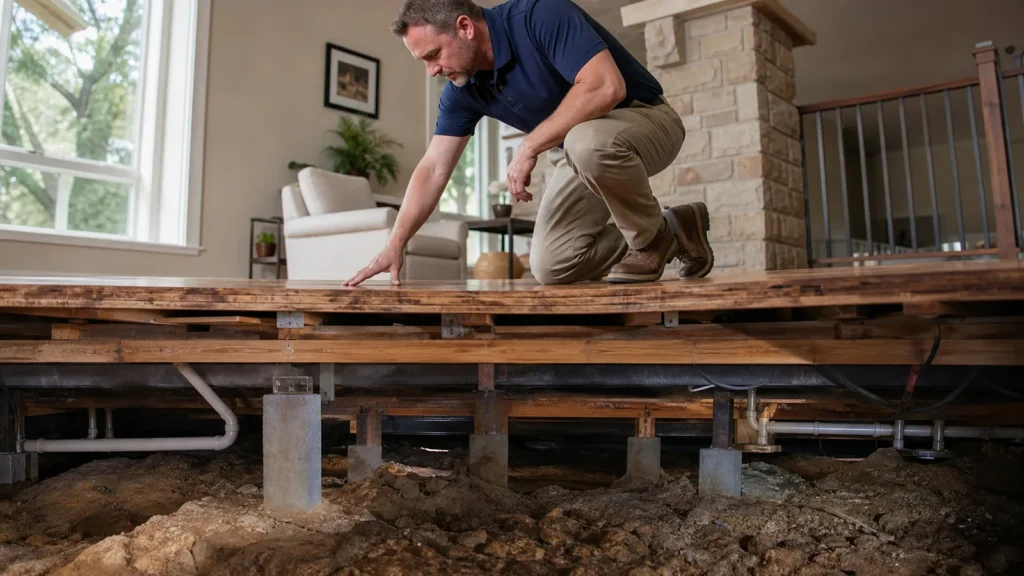
A bouncy floor may come from joist or beam deflection, a support gap, a shifted pier, a weak connection, or moisture-related wood damage. The location and span of the bounce help identify which component needs attention; adding a random support without diagnosing the load path can miss the cause.
Pier and Beam Foundation Problems Commonly Seen in Lakeway Homes
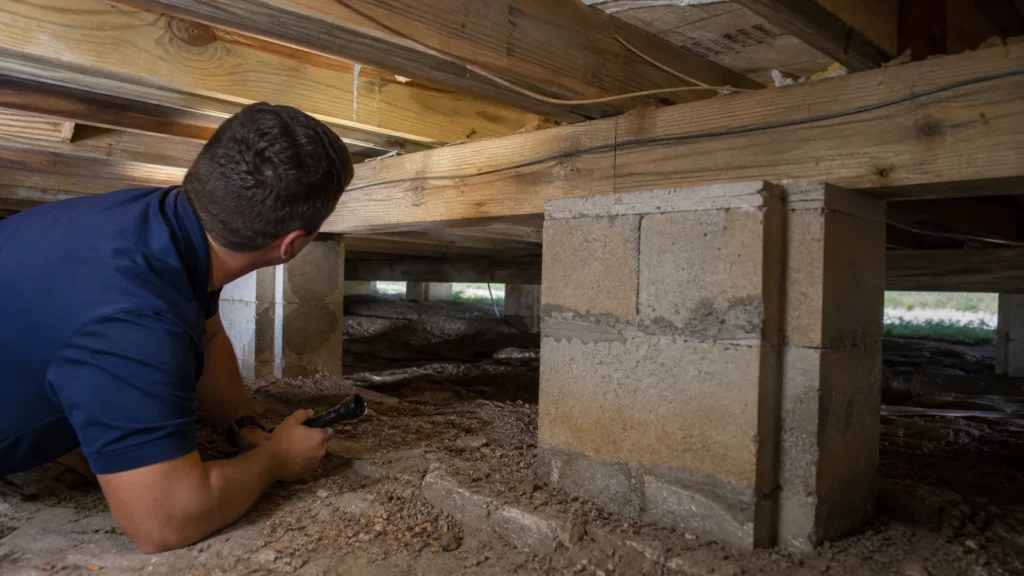
Pier-and-beam problems can involve shifted or deteriorated supports, uneven load paths, moisture below the home, damaged wood components, or soil movement. Typical clues include bounce, localized dips, interior cracking, opening misalignment, and visible changes in the crawlspace.