
House Leveling vs. Foundation Stabilization: A Lakeway Guide
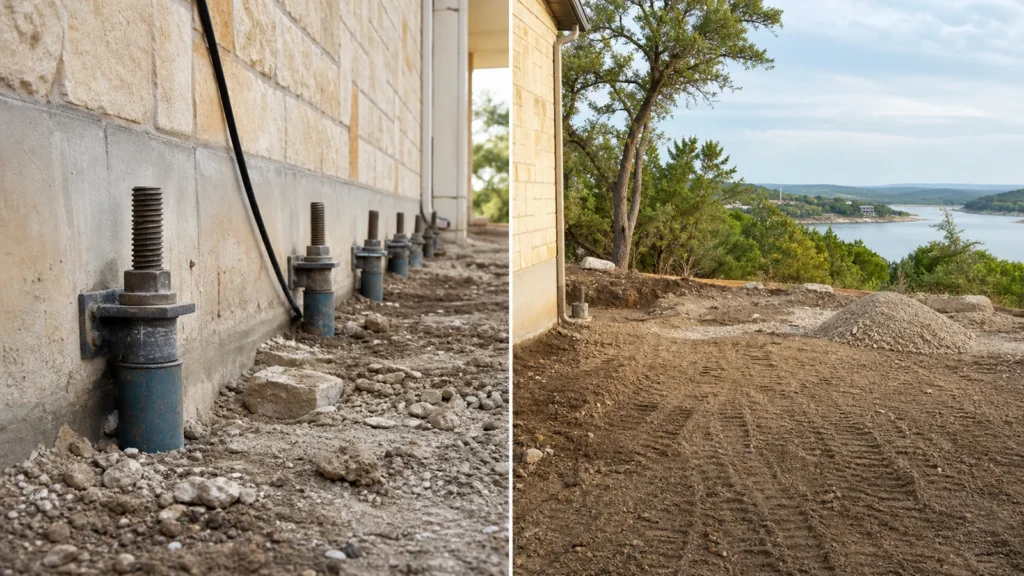
Leveling focuses on improving a structure’s position or floor profile, while stabilization focuses on improving support and limiting continued harmful movement. A project may involve one or both. The diagnosis should state whether the priority is correction, support, or a staged combination.
House Leveling in Lakeway: What the Process Is Designed to Do
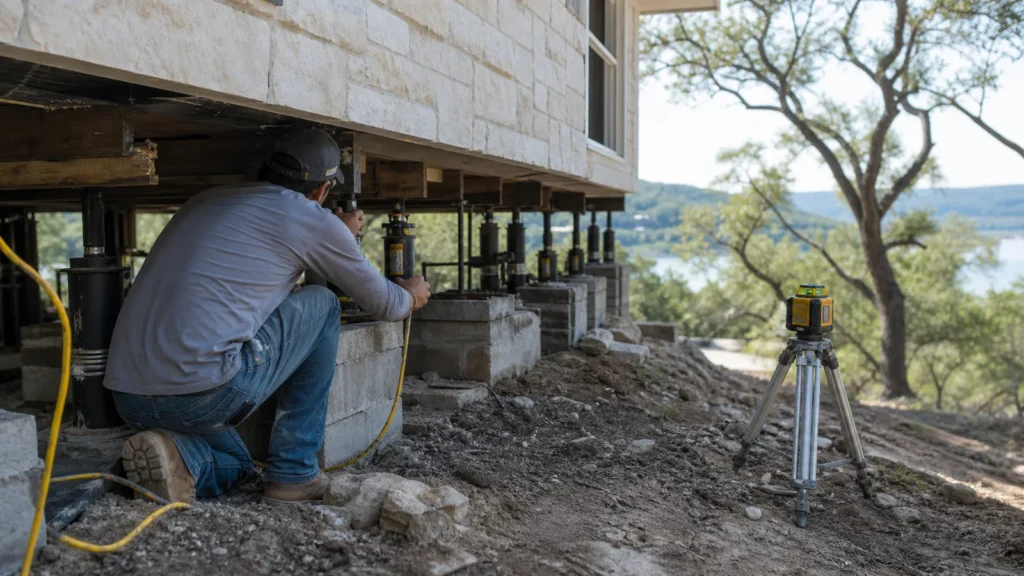
House leveling is designed to improve the structure’s support and correct harmful unevenness in a controlled way. The process starts with measurement and diagnosis, then uses a planned sequence of support adjustments or repairs. The safe target is based on the building’s condition, not a promise that every old finish becomes perfectly straight.
Bouncy Floors in a Lakeway Pier and Beam Home: Possible Causes
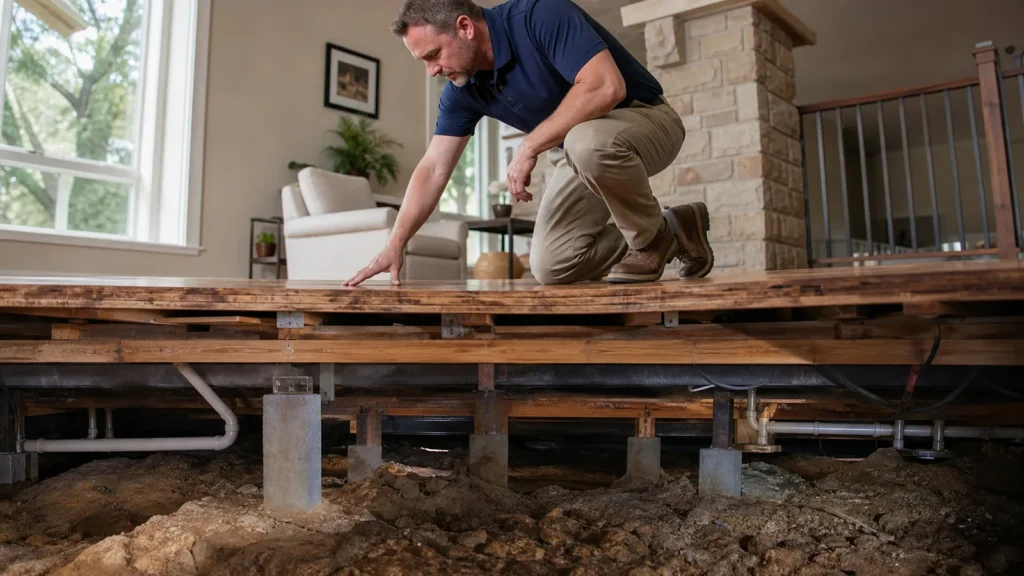
A bouncy floor may come from joist or beam deflection, a support gap, a shifted pier, a weak connection, or moisture-related wood damage. The location and span of the bounce help identify which component needs attention; adding a random support without diagnosing the load path can miss the cause.
Pier and Beam Foundation Problems Commonly Seen in Lakeway Homes
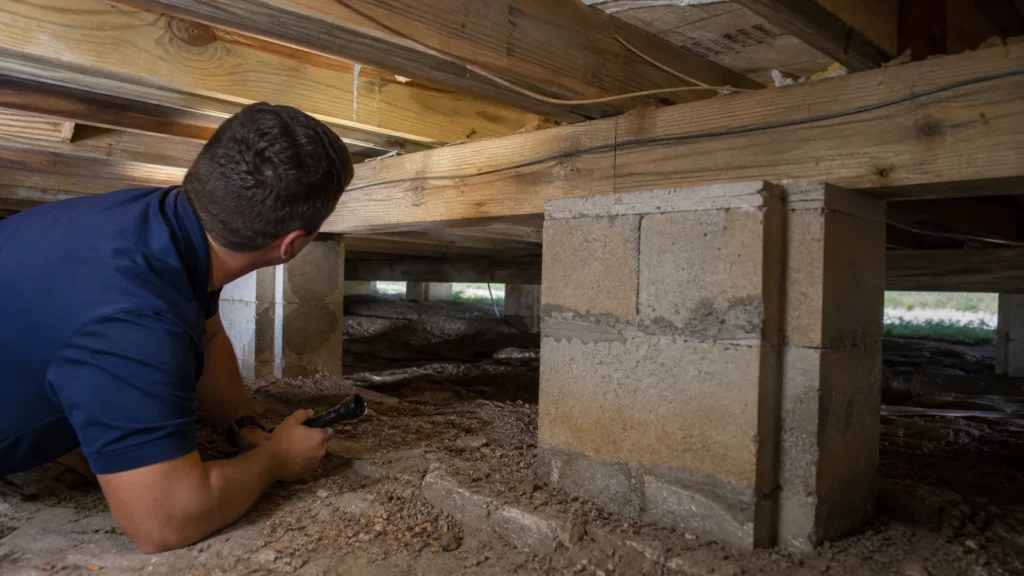
Pier-and-beam problems can involve shifted or deteriorated supports, uneven load paths, moisture below the home, damaged wood components, or soil movement. Typical clues include bounce, localized dips, interior cracking, opening misalignment, and visible changes in the crawlspace.
Plumbing Leaks and Slab Movement in Lakeway: What to Check First
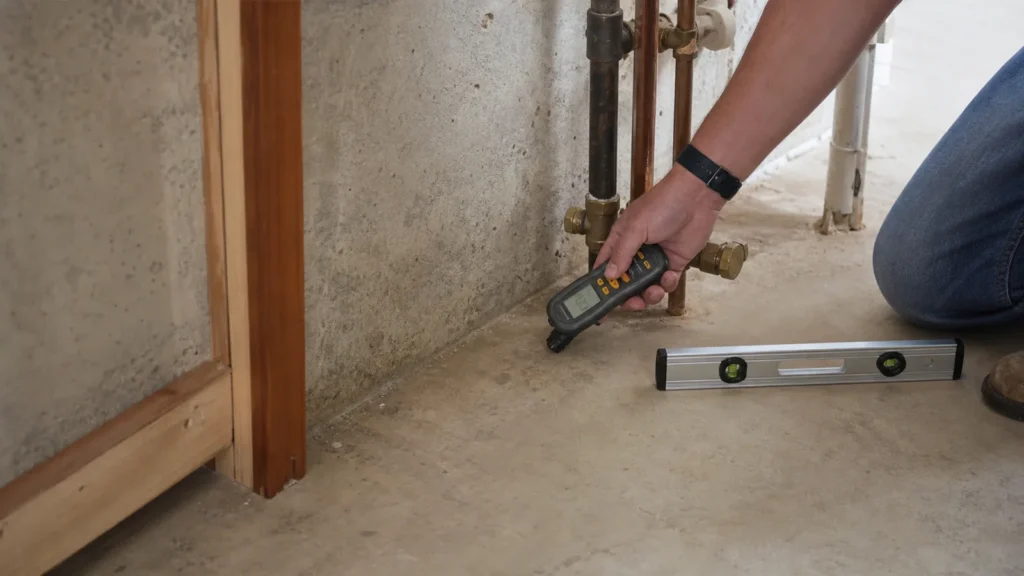
Plumbing leaks and slab movement can occur together, but one does not automatically prove the other caused it. Check for unexplained water use, damp or warm flooring, sound of running water, and localized movement, then involve the appropriate plumbing and foundation professionals so each condition is tested directly.
Tile and Grout Cracks: When Lakeway Slab Movement May Be Involved
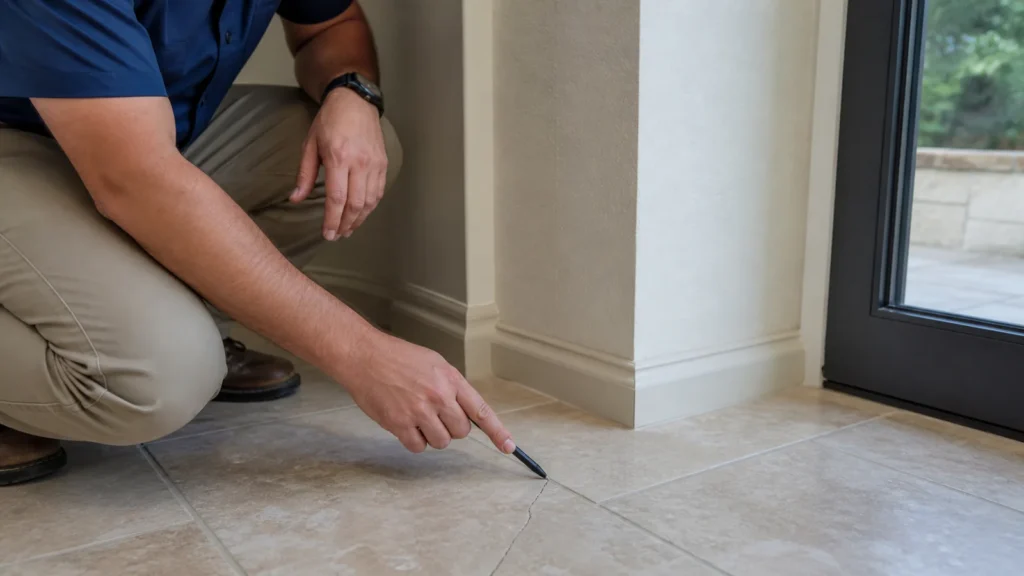
Tile can crack because of installation, impact, temperature change, or movement beneath it. Foundation movement becomes more likely when cracks cross several tiles in a continuous line, return after repair, or align with wall cracks, floor slope, and door changes.
Concrete Slab Settlement in Lakeway: Causes, Clues, and Next Steps
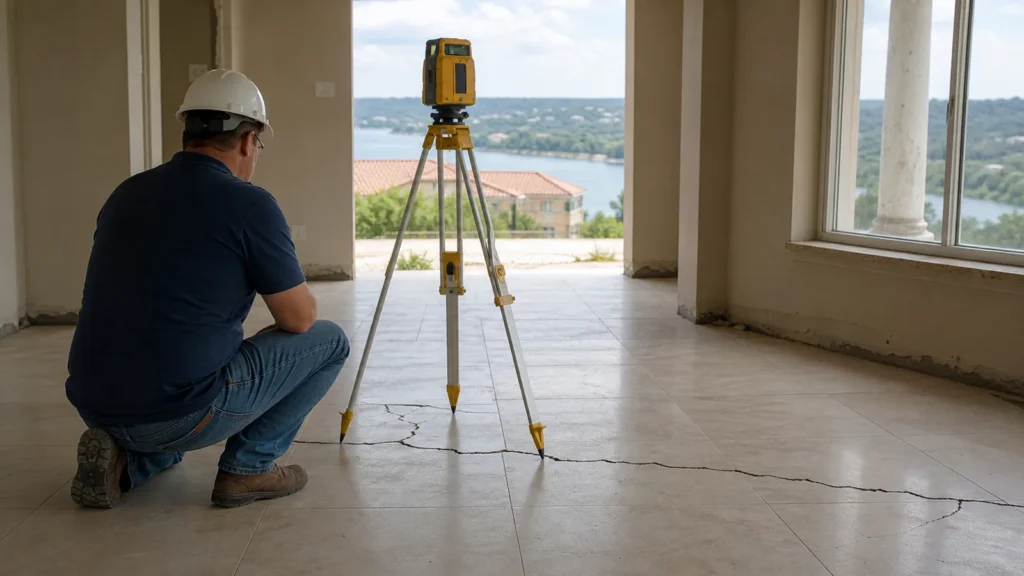
Concrete slab settlement occurs when part of the foundation loses support or moves differently from another part. The result can include floor slope, tile cracks, wall cracks, and opening misalignment. The next step is to map elevation and symptom patterns so the repair recommendation addresses the affected area rather than the appearance alone.
A Lakeway Homeowner’s Foundation Inspection Checklist
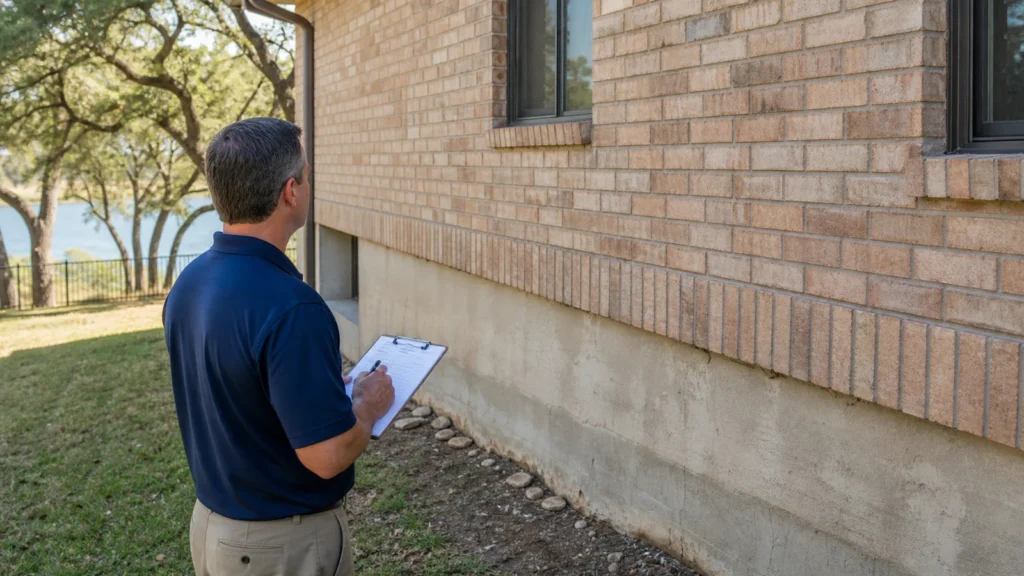
A useful foundation check starts outside with drainage, soil gaps, slab or pier exposure, and masonry, then moves inside to floors, walls, doors, windows, cabinets, and plumbing clues. Record observations with dated photos instead of trying to diagnose the repair method yourself.
Why Doors and Windows Stick When a Lakeway Foundation Moves
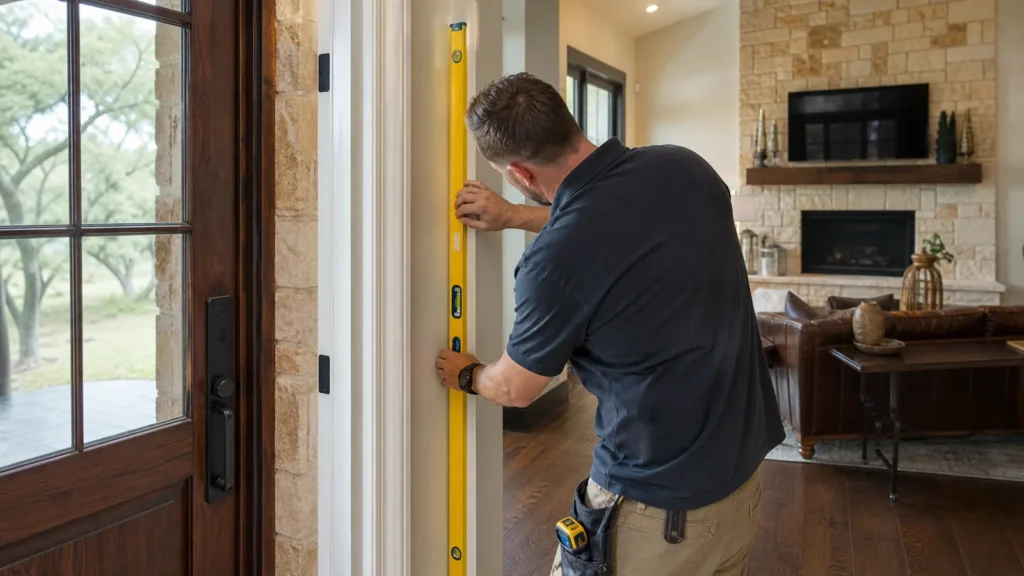
Foundation movement can shift wall framing out of square, which changes the clearances around doors and windows. Humidity, hardware, and paint can cause similar symptoms, so the strongest warning is a new or worsening fit problem that appears with diagonal drywall cracks, trim gaps, or uneven floors.
Uneven Floors in Lakeway: What They Can Reveal About a Foundation
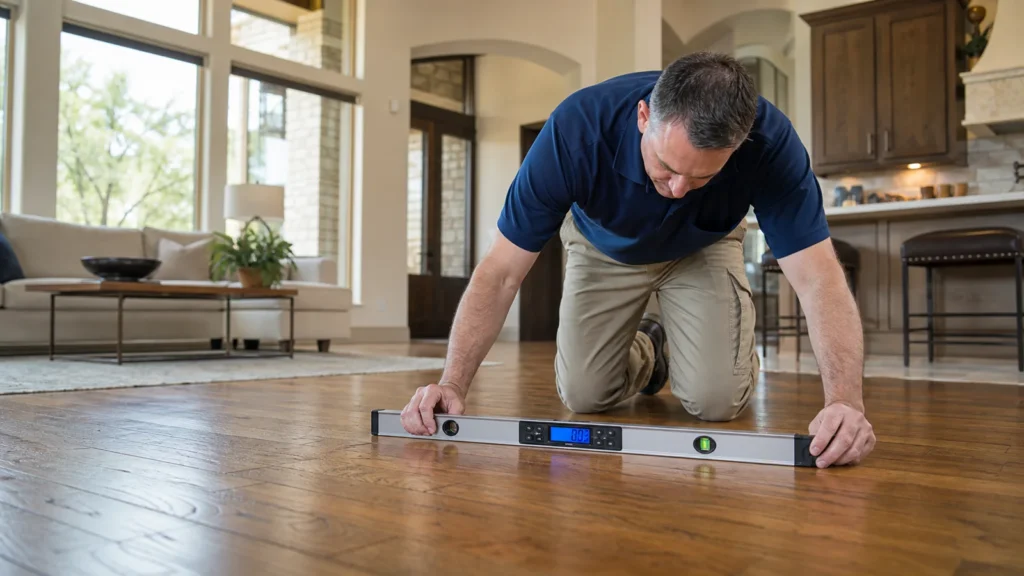
Uneven floors may reflect slab settlement, pier-and-beam support movement, damaged subflooring, or a localized flooring issue. The direction, area, and feel of the change help narrow the cause. A professional should evaluate a growing slope, a soft or bouncy zone, or unevenness paired with wall and door symptoms.