
How Should Lakeway Homeowners Monitor a Foundation After Repair?
A practical Lakeway post-repair foundation monitoring guide covering records, photos, drainage, plumbing, slab and raised foundations, warranties, and rechecks.
Dripping Springs Foundation Care Through Wet and Dry Cycles
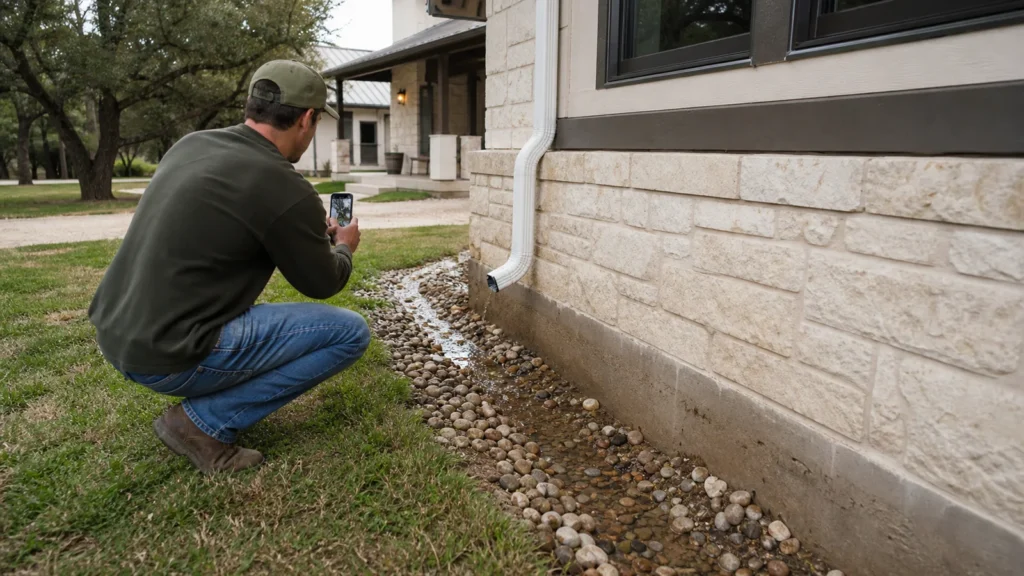
Dripping Springs property owners can track foundations through weather changes by keeping drainage paths clear, photographing repeat locations, noting soil gaps or erosion, and recording doors, floors, and cracks. Maintenance reduces avoidable water concentration but does not replace repair when measured movement is present.
Foundation Repair in Bee Cave: Slab and Drainage Clues
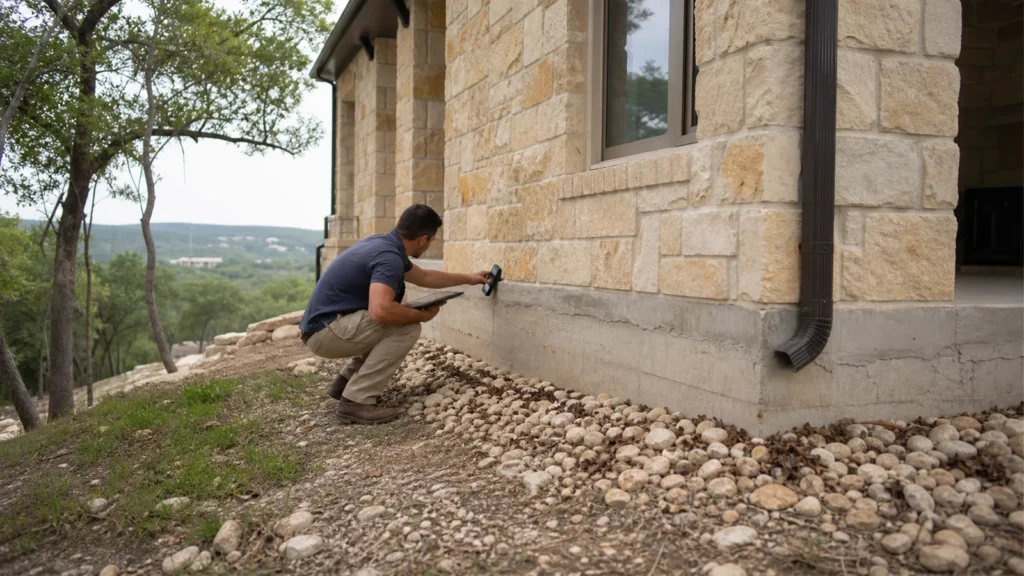
Bee Cave owners should document slab or masonry cracks, floor changes, sticking openings, ponding, runoff concentration, and erosion around the same area of the home. A cluster of structural and drainage clues deserves an evaluation, while one stable cosmetic mark may only need monitoring.
Crawlspace Moisture and Pier and Beam Foundations in Lakeway
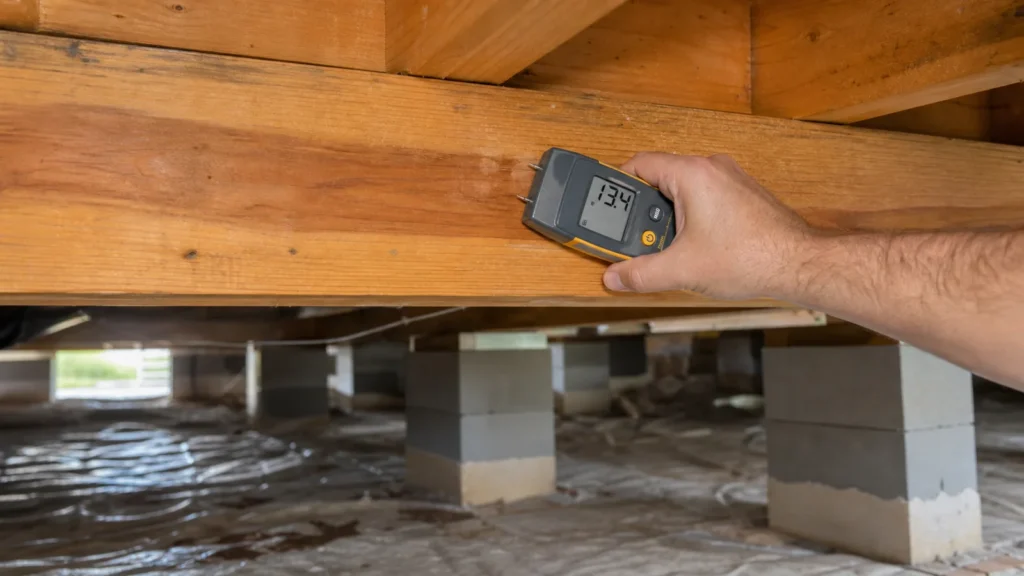
Persistent crawlspace moisture can affect wood, connections, air quality, and access beneath a Lakeway home. Owners should look for water entry, standing moisture, staining, odor, corrosion, and soft wood, then correct the source and evaluate any affected structural components.
Foundation Drainage Around Lakeway Homes: Practical Prevention Steps
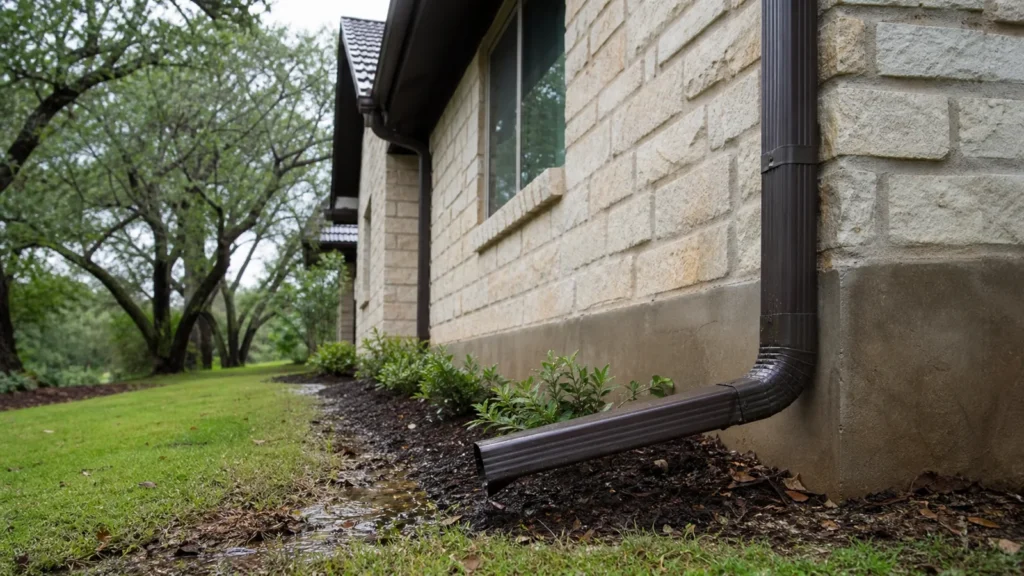
Good drainage directs roof and surface water away from the foundation, keeps discharge points clear, and prevents low spots from repeatedly concentrating moisture beside the structure. Drainage maintenance can reduce stress, but it does not reverse existing settlement or replace a foundation evaluation.